Showing posts with label collections. Show all posts

13 August 2025

Beating the Heat and Humidity: How to Manage your Collections in a Coastal Climate by Cassandra Knoppel

Late last month, at the onset of the terrible heatwave we had in Beaufort, my home's air conditioning went out. My husband and I came home from work on a Friday evening to find the temperature in our house climbing above 85° F, and the HVAC repairmen said we'd have to wait until at least 8:30 that night before someone could get out to take a look at it. My husband's first concern was the health of his wife and dog in the heat (and the safety of the homemade hot sauce he was fermenting). My first concern? Aside from the health of our poor old dog, I was bombarded with thoughts like "How soon until the walls grow mold?" and "Do we have any precious documents and photos that might get damaged in the high heat?" My reaction was admittedly a little more extreme, but that's because I have to keep these things in mind at work as we try to preserve our historic collections in a hot and humid climate. 

Heat and humidity are two of the worst enemies of preservation, and given where the BDC is located, some might think that we are fighting a losing battle. ASHRAE designated Beaufort County as being within Zone 2-A: Hot-Humid, but any local knows that fact just by stepping outside in the months between April and October. Living in such a climate makes things difficult, not just in terms of staying comfortable but in keeping things safe from creatures and critters who thrive in muggy conditions. In the Getty Conservation Institute's Managing Collection Environments: Technical Notes and Guidance (2023), the authors state that "...a Zone 2A Hot-Humid climate can be expected to host microorganisms and insects throughout the year" (p.60). Microorganisms like mold and insects of all varieties can damage collections, and hot and wet conditions on their own can also slowly degrade the integrity of cultural materials.

But, despite the clammy cards we've been dealt here in Beaufort County, the BDC follows guidelines and best practices that help us to conquer the threats to our collection, and we'd like to share some of these tips with those of you who might be worrying about the safety of your collections in this weather, too. We've adapted the 2023 CCAHA article "Hot and Humid Weather Preservation Tips from CCAHA's Preservation Services Office," which is geared more towards collections professionals, to make their 5-point list more relevant to at-home preservation of personal document and photograph collections (along with some additional advice).

1. Find a safe place to house your collection

Last year, I worked on a collection of records that had once been stored in a shed for many years. The members of the organization recognized this was probably not a great place to keep their records but were limited in places to store their materials. When the organization made the decision to give the BDC their records, they felt relieved that the collection would be a safe environment, and we felt that way too! However, those years of less-than-ideal storage conditions had taken their toll on some of the records. Materials bore signs of water damage, some pages had dormant mold, and photographs were stuck together from heat and water-caused delamination, which the BDC remediated as best we could.

To prevent something like this from happening to your personal collections, it is best to store materials somewhere safe from huge swings in temperature and humidity levels and away from potential sources of water or pest damage. Attics, basements, sheds, and garages are not safe storage areas because they are often not temperature or humidity controlled, can be pest "hot spots," are more likely to flood or experience leaks, and are less convenient for periodic monitoring (which is something we'll address later in this post!). Instead, find somewhere in your home that is climate controlled. Keeping collections off the floor is also ideal, as it can prevent damage caused by flooding if your roof leaks from one of the Lowcountry's furious mid-summer thunderstorms (or hurricanes!). It would be best not to store items in areas with known issues with leaks, mold, or pests either.

Collections Environment Infographic
by CCAHA   
2. Create and maintain the right "climate" for storage

Ideally, collections should be kept in an environment that is between 50° and 77° F. This can prevent some of the chemical reactions that can happen in high heat that causes materials to fade or yellow, become brittle and crack, or melt and stick to one another.

Maintaining a safe humidity level is also important, as the relative humidity is a big factor in mold growth. If your HVAC system allows for it, keeping the relative humidity below 65% can prevent mold from germinating and growing on your treasured documents and photographs. (If you're extra nerdy like me and would like to learn more about the most ideal environmental conditions for museums, archives, and historic houses, you can check out the chart provided by ASHRAE on page 117 of the Getty's Managing Collection Environments: Technical Notes and Guidance.) If you cannot monitor and adjust relative humidity through your HVAC system, you can also use a portable dehumidifier and set the relative humidity level to 75% or under. This can help keep both you and your collections comfortable in muggy weather. Using a fan to move air around your collection storage area also helps to lower the humidity and prevent mold from growing.

3. Periodically monitor your collections and their storage environment 

Once you set up your personal collection storage area, it is important to keep tabs on the space to see if any issues arise. In the BDC, we check the temperature and relative humidity level in our collection twice daily to ensure that we are operating within safe levels, but a less frequent check of your storage area can suffice, especially if the storage area is a bookshelf in a room that you frequently spend time in. If you don't otherwise frequent the storage area as often, it is best to check in periodically to ensure that the temperature and humidity levels are as they should be, that pests have not invaded the space in your absence, and that, perhaps, your HVAC drain pan in the attic has not backed up and created a ceiling leak that is dripping rusty water on your items (ask me where I came up with that example!). Staying abreast of any potential problems before they get out-of-hand and cause real damage to your collections is always a good idea.

You can create a routine of checking the environment weekly or even monthly, depending on your collection's needs and your schedule. If the weather is particularly rainy, or a large storm has just blown through town, it would be good to check your storage area in addition to your regularly planned "inspection" to see if any leaks in windows or ceilings have materialized. If a heatwave is affecting the area and you have multiple HVAC systems in your home, I would also suggest checking your storage area to ensure that the system in that area of your house has not failed or is struggling to keep up. 

Remember: Prevention and preservation are much easier (and cheaper) than remediation and restoration!

I hope these tips are helpful to those who are either getting started or in the midst of preserving your personal heritage items here in the Lowcountry. While it can be overwhelming to know that preserving materials is not a simple, one-time thing but more-so an ongoing and evolving process, doing so is vital to ensure that the things we value are available for future generations. 

References: 

ASHRAE. (2021). ANSI/ASHRAE Addendum a to ANSI/ASHRAE Standard 169-2020: Climatic data for building design standards. https://www.ashrae.org/file%20library/technical%20resources/standards%20and%20guidelines/standards%20addenda/169_2020_a_20211029.pdf
Conservation Center for Art & Historic Artifacts. (n.d.). Collections environment infographic. Conservation Center for Art & Historic Artifacts. Retrieved August 1, 2025, from https://ccaha.org/resources/collections-environment-infographic
Conservation Center for Art & Historic Artifacts. (2022, October 24). Temperature, relative humidity, and dew point for collections. Conservation Center for Art & Historic Artifacts. https://ccaha.org/resources/temperature-relative-humidity-and-dew-point-collections
Conservation Center for Art & Historic Artifacts. (2023, June 15). Hot and humid weather preservation tips from CCAHA’s preservation services office. Conservation Center for Art & Historic Artifacts. https://ccaha.org/news/hot-and-humid-weather-preservation-tips-ccahas-preservation-services-office
Core: Leadership, Infrastructure, Futures a division of American Library Association. (n.d.). Quick preservation tips. Preservation Week. Retrieved August 1, 2025, from https://preservationweek.org/resources/quick-preservation-tips/
Gaylord Archival. (n.d.). Agents of deterioration. Gaylord Archival. Retrieved August 1, 2025, from https://info.gaylord.com/resources/agents-of-deterioration
Taylor, J. T., & Beltran, V. L. (Eds.) (with Getty Conservation Institute). (2023). Managing collection environments: Technical notes and guidance. Getty Conservation Institute. https://www.getty.edu/conservation/publications_resources/pdf_publications/pdf/mce-technical-notes-and-guidance.pdf


25 September 2022

New (and New to Us) Materials in the Research Room, May 2022 - August 2022

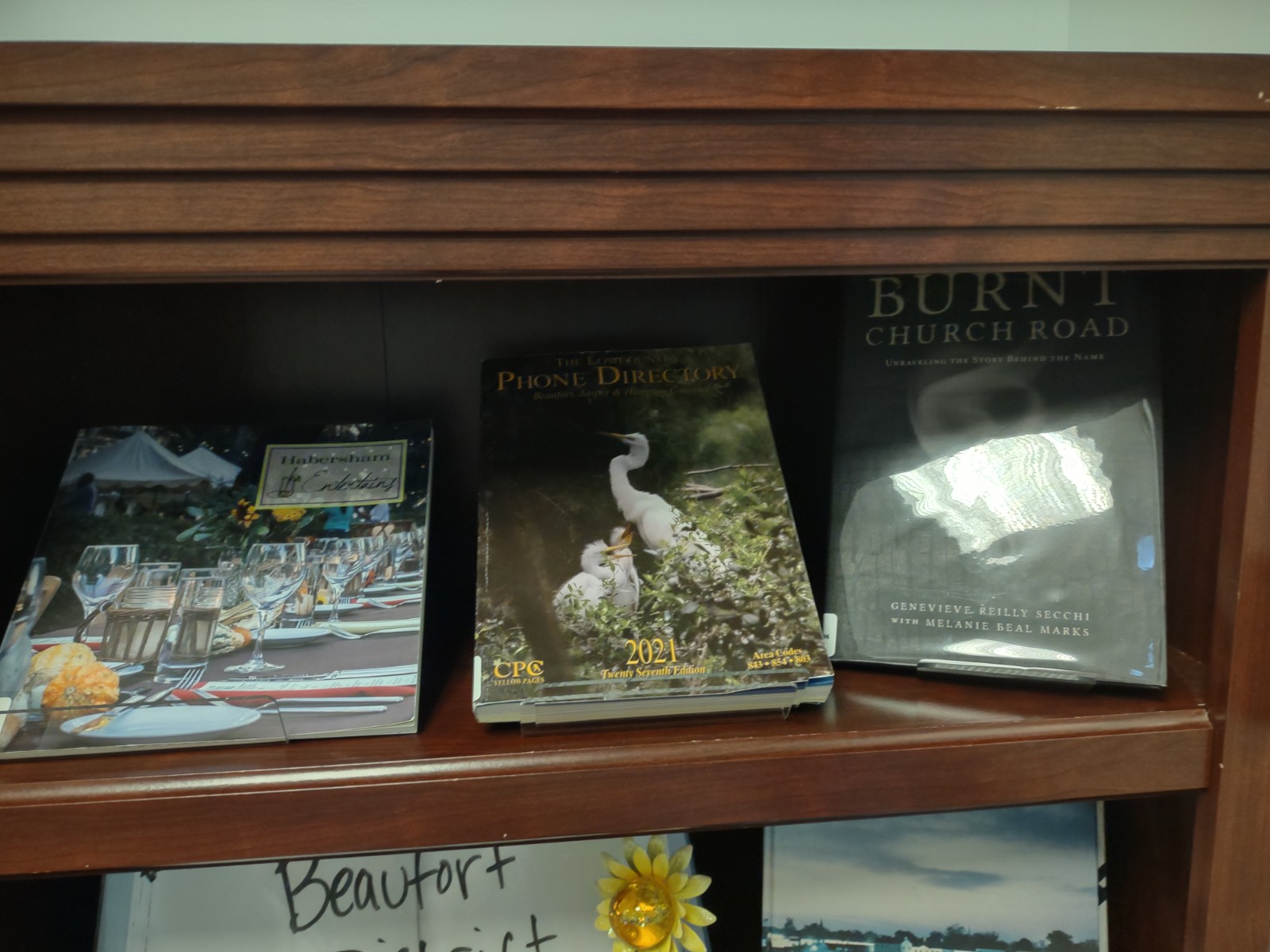
In spite of my prolonged absences this calendar year due to the final illness of my husband and my own knee replacement surgery, the Research Room continues to add items to our holdings for permanent retention. Most have been gifts. Of the six items shown in this first photograph, I only bought one. 

Fifteen Hurricanes of the Carolinas by Jay Barnes was a gift of the author because he used a few of our hurricane images in his book. More copies are on the way for you to borrow from the local history section at your nearest branch library. 

Similarly, the BDC Research Room received were two copies of the Jewish Historical Society of South Carolina's Summer 2022 magazine issue that covers the Jewish Community in Beaufort. The JHSSC also used some visual materials from our holdings in the article.  

Not shown but received from Robert Hall were some relevant Southern Exposure magazine issues with Beaufort District related articles. 

The 1990 SCAIA Review of Architecture that has the Port Royal observation tower on the cover came from a donation to the Friends of the Beaufort Library who in turn let me have it. 

We actually added two issues of the Islander annual of the Beaufort Junior High School, 1976 and 1977. The 1977 annual is not shown in the photograph. We also received and cataloged the 1980 and 1981 Talon annuals for Battery Creek High School. The Islander and Talon annuals came from Misty Barton.  The 1950 Beaufortonian from Beaufort High School along with 2nd copies of the BHS annuals for 1951, 1952, and 1953 (not shown in the photograph) were donated by Henry Jackson.

American Conquistador: An Action-Adventure that is more Robin Hood than Robin Hood. And the Story is True! by Daryl Arden Ferguson covers the early Spanish and French settlements in our area. There are also copies of this title that you can borrow from the Local History sections at the branch libraries. 

It may seem odd to some that I would allow shelf space for a 1995 Profile & Business Catalogue of Hilton Head Island but these sorts of directories can be invaluable to those doing family history in the future. 

I bought volume 7 of the Short Story America series to add to the ones we already have


Shelf three of the display bookcases has two items about the Marine environment: Southern Flounder: Natural History and Fishing Techniques in South Carolina by Dr. Charlie Wenner and John Archambault, a SC Department of Natural Resources publication from 2005 and the Guide to South Carolina Marine Artificial Reefs from 2006. Horticulturally speaking I added The Lowcountry Gardener from the Beaufort Council of Garden Clubs of 2016 to our other editions of this "basic guide to garden planning for every season." All three of the items were gifts from the Friends of the Beaufort Library. 

Habersham Entertains (2018) is primarily promoting a leisure lifestyle through a cookbook.  It is divided into the four seasons and thence by theme. For example, the section on Autumn has the following menus with accompanying recipes: 
"Harvest Festival; An Autumn Feast; Farmer's Table Dinner; Wine List & Finger Foods; and Chili Cook-off." The Spring section includes "Bottles & Barrels; Coastal Living's A Table for 20; Porch Parties; Appetizers Made Easy; BTR [short for Beaufort Twilight Run] and Oyster Roast; [and]  Retreatables" for informal gatherings to watch the sunset from the community's River Retreat Pavilion. 

I donated an extra copy I had at home of the Lowcountry Phone Directory: Beaufort, Jasper & Hampton Counties for 2021. Phone books can be invaluable for title researchers and family historians.  

Burnt Church Road: Unraveling the Story Behind the Name by Genevieve Reilly Secchi with Melanie Beal Marks (2020) explains the history of how this particular thoroughfare in Bluffton got its name. The research was commissioned by the owner of the Burnt Church Whiskey Distillery. Families connected to the history of the area include Seabrook, Kirk, Martin and Cram. We got this title from Doug Rooney of Sun City who sent it to me via the Bookmobile South staff. 

I added an older technology, that of the cassette tape, when I accessioned Luke Gullah: De Good Nyews Bout Jedus Christ Wa Luke Write by the Sea Island Translation and Literary Project (1995) in which one can hear this book of the Gospel read in the Gullah Language. We have a cassette player in the Research Room for our customers to use. 

Please contact me at least a few days in advance of your proposed visit to our Research Room: gracec@bcgov.net or 843-255-6468. 

08 May 2022

New (and New to Us) Materials Received in March - April 2022

There was something of a flourish of new (and new to us) materials arriving in March and April 2022 - so many that my display cabinets overflowed in the final days. The image shown was taken on April 28th and does not include the items that arrived from Technical Services on the last work day. As per usual, some were purchases and some were gifts; some were recently published materials; some were copies of much older published materials. Some were second copies that I acquired on purpose - just for their local rarity. Some were a different edition of an item already in the Research Room. All must fit the rubric for acquisition and permanent retention in the BDC whether by purchase or by donation.

I made a few purchases over the past two months. On October 20, 1862, three men disembarked from the steamer, Ericsson, and together they "would have more influence on the future Beaufort District than any other wartime arrivals" (Wise and Rowland, vol. 2, p. 157). The Lost President : A.D. Smith and the Hidden History of Radical Democracy in Civil War America (2019) by Ruth Dunley is a short and fascinating biography of one of them, US Tax Commissioner Abram Smith. I added the title to the Local history sections at Beaufort, Hilton Head, and St. Helena Branch Libraries in case you'd like to read it at home.

Salmon P. Chase: Lincoln's Vital Rival (2021) is important to Beaufort District's own history and to the Beaufort County Library's own history. As Lincoln's Secretary of the Treasury, it was Chase who declared "We do not make war on libraries!" and prevented the sale of the Beaufort College collection. Author Walter Stahr's specialty is Civil War biography. Hilton Head Branch purchased a copy for its general collection that Beaufort County Library cardholders can borrow as well.

I purchased Platz, Plats, Platts, Platt of South Carolina : Over Two Hundred Sixty-five Years of a Salkehatchie River Family volume 1 (1995-2017) to add to our genealogical stacks. All copies of this title held by SCLENDS libraries are stored in Reference collections.

I discovered in updating a very, very old BDC WordPress post that the BDC lacked some important scholarly works about Beaufort's native son Leon Keyserling and his approach to economics. Therefore, I purchased three books to remedy that situation: Designing Economic Policy: An Analytical Biography of Leon H. Keyserling by W. Robert Brazelton (2001); Leon H. Keyserling : A Progressive Economist by Donald K. Pickens (2009); and The Coming of Keynesianism to America: Conversations with the Founders of Keynesian Economics edited by David C. Colander and Harry Landreth (1996) that includes a transcription of an interview with Leon Keyserling done in June 1984. The BDC is the only library within SCLENDS to hold these three titles.

The Friends of the Beaufort Library were the source for 
River of Words: Musings on Port Royal Sound Through Poetry and Art produced by Students of Beaufort County School Distirct (2016 ) that joins other issues of the series and "Goin' to the Lowlands II" program for the Michigan Support Group for Penn Center's fundraiser held at the Detroit Yacht Club in 1993. They also let me pick the Speech of Hon. Wade Hampton, of South Carolina, in the Senate of the United States on Senate Bill No. 398 to Aid in the Establishment ane [sic] Temporary Support of Common Schools delivered on March 27, 1884. 
Hilton Head Branch Library transferred a few items from its holdings for permanent retention in the BDC Research Room. The Hilton Head Dolphin Book written and illustrated by Leslie E. Parker, Jr. (1995) should come in quite handy during the BDC's virtual contribution to the "Oceans of Possibilities" Summer Reading Program 2022. It joins his The Hilton Head Turtle Book (1997) and The Hilton Head Alligator Book (1994).

I was happy to be able to add the 2001 Membership Directory of the Hilton Head Island Chamber of Commerce. Those rosters of members grow in historical and genealogical value through the years.

I was thrilled to get a critical volume to complete a set. T
hough the BDC has the first 3 volumes of the David Duncan Wallace's classic History of South Carolina (American Historical Society, 1934) we lacked volume 4. I got the Biographical volume to complete the set from a donor - all 1000+ pages of it. It is chocked full of genealogical related material - so much in fact that I decided to add it to the public area of the Research Room for ease of customer use. The odd thing is the arrangement of volume 4: it is not chronological nor alphabetical nor by county of residence nor by city of residence. One must use the index to locate the biographical entries. On a personal note, I found one of my maternal ancestral sides in it. If you think that one or more of your ancestors who were alive before 1934 might be in it, contact me and I'll look in the index to see: bdc@bcgov.net.

I added different editions of several titles already in the Research Room from Friends of the Beaufort Library and Hilton Head Island Branch Library donations: the 1987 revised edition of Plantations of the Low Country by N. Jane Iseley, William P. Baldwin, Jr. and Agnes L. Baldwin; the 1867 edition of Carolina Sports by Land and Water by William Elliott; the original 1938 edition of Plantations of the Carolina Low Country by Samuel Gaillard Stoney; the 2002 edition of Gullah Cultural Legacies by Emory S. Campbell; a revised edition of Nell S. Graydon's classic Tales of Edisto (1986); the 6th edition of the Cruising Guide to Coastal South Carolina and Georgia (2007); the Polk City Directory for Beaufort (2021) and the WPA Guide to the Palmetto State reprinted by the University of South Carolina Press in 1988 that includes a new introduction by South Carolina's pre-eminent living historian Walter B. Edgar.   

Those who know me in person know that cooking is not high on my list of enjoyable tasks - so it's always been a bit ironic that I have spent so much of my career here collecting recipe books for permanent retention. Due to the very local nature of most of the cookbooks housed here, I added an extra copy of both Out of Beaufort Kitchens by the St. Helena Council No. 43 Daughters of America, Beaufort, S.C. (1964) and Favorite Recipes of Beaufort's Brenda Arts & Crafts Club (1960). 

Other donations that became copy 2s were Program. People. Place: The Making of a Library for St. Helena Island (2009) and the Hill-Donnelly's Hilton Head-Beaufort South Carolina and Vicinity Cross-Reference Directory (1991) 

Journals arriving were the donated May River Review: An Interdisciplinary Critical Journal from the University of South Carolina Beaufort's English Department (Spring 2018) and the purchased latest issue of the South Carolina Historical Magazine (January 2019). Volume 120, issue #1 contains a fascinating article by Peter N. Moore about Native Americans before and at the time of the earliest European settlements entitled "Indigenous Power and Collapse on the Lower South Carolina Coast, Precontact - 1684", pp. 4 - 29. Most of the materials he cites in his article are available in the Research Room by advance appointment. [The latest issue of SCHM and the Wallace volume 4 mentioned above bring the total of items in the public area of the Research Room up to 684.]

An off-site reference inquiry turned into an on-site Research session and a later mailed in donation of additional vertical file materials about Martha Sleeper, whose obituary is shown on the right. What an interesting woman.

As most of you know, the BDC does not purchase novels but I have been known to add a few donated novel titles to the collection as an indication of the literary history of this area. This time I have added two titles, Someone Knows my Name by Lawrence Hill (2007) and The Chronicles of Willow Point by E.T. Baysden, Jr. (2019).  

I highly recommend Someone Knows My Name as a book club title. Hill tells the story of a kidnapped young African girl who is sold to a planter on St. Helena Island. She escapes to the British ultimately becoming one of their scribes recording the names of those Black Loyalists who are freed for their service to the Crown and relocated to Nova Scotia. As we get ever closer to the 250th Anniversary commemoration of the American Revolution, I expect that this title will rise on the Library system's book club roster of titles to explore. (Longer term residents might recall Hill's book talk at Beaufort Branch, sponsored by the Consulate General of Canada in Atlanta office that I had to cede to them - because the BDC doesn't "do" novels. Sigh. I don't remember the year - though I know it was before 2010 because the BDC was still downstairs when he spoke and Rosalyn Browne was still at Penn Center at the time. Geez, but I did hate to have to pass on his Book Talk.)  

The Chronicle of Willow Point looks more like a history than a novel, particularly on the basis of its subtitle "A Lowcountry Family in the Century Following Cotton and Rice" and the surnames of its main characters. The author moved to Beaufort County in 1970 and worked as the chief marketing officer for a number of the plantation residential communities before his retirement: Sea Pines Resort, Callawassie Island, Spring Island, Oldfield Club, and Palmetto Bluff. You'll recognize the references to key mid-20th century events and places in the narrative.   

27 February 2022

New and (New to Us) Materials in the BDC, December 2021 - February 2022

Here's a list and short description covering the items and/or archival materials added to the BDC's Research Room holdings from December 2021 through February 2022. As per usual, some were purchases and some were gifts. 

Gullah Spirit: The Art of Jonathan Green (University of South Carolina Press, 2021) reproduces artworks in the seminal style of one of Beaufort's native sons. Green never disappoints when it comes to showing vibrant colors in motion. This joins other materials in the BDC's Research Room. Copies are available in the local history sections as well. 

American Shamans: Journeys with Traditional Healers by Jack Montgomery (Busca, 2008) covers a lot of traditional healing practices throughout the United States. I purchased a copy primarily on account of the inclusion of the transcript of Montgomery's interview with Sheriff Ed McTeer in 1974. Though truth be told, another factor towards purchase was the fact that I am thanked for providing reference services, along with former BCL staffers, Fran Hays and Rachel Kingcaid, while the author was conducting research in the early 2000s was an added incentive. Librarians and archivists appreciate acknowledgement of our skills just like ever other humans do.

Conceiving Carolina : Proprietors, Planters, and Plots, 1662-1729 by L. H. Roper (Palgrave Macmillan, 2004) I discovered this title in my search to help a customer interested in the earliest settlers to South Carolina. It will join all the other titles I wrote about in "Little Known Proprietary Era Materials in the Research Room."

Free Blacks and Mulattos in South Carolina 1850 Census abstracted by Margaret Peckham Motes (Genealogical Publishing, 2000) One could compile this list on their own by manipulating a results list on the 1850 US Federal Census for South Carolina on Ancestry Library Edition or FamilySearch but sometimes I find that my customers just want to eyeball a printed material on a particular subject. This little volume is alphabetically arranged by surname. The abstract format is:
Last name, first name, age, sex, occupation (if indicated), color, birthplace, dwelling #, family #, county. Notes if any apply
HOUSTON, JOHN, 14, M, (--), M, SC 177, 177, BEAU. In HH of Sarah Houston f 52 mulatto born SC  
HOUSTON, SARAH, 52, F, Pastry Cook, M, SC, 177, 177, BEAU
Now isn't that easier than depending on electronic databases? Besides we still have the microfilm of the US Federal Censuses 1790 - 1880, 1900-1930 that cover Beaufort, Hampton and Jasper Counties - which of course includes the 1850 Census that is the subject of this abstract.

A Genealogist's Guide to Discovering Your African-American Ancestors : How to Find and Record Your Unique Heritage by Franklin Carter Smith and Emily Anne Croom (Genealogical Publishing, 2008) I ordered this book because it includes case studies for how to approach documentation of persons of mixed race, how to figure out family, kith and kin relationships, and offers work-arounds for the particular challenges of identifying late 19th and early 20th century ancestors.

A History of the Port Royal Bands by John Brookfield (Sam Teddy Publishing, 2015) is one of those titles that I learned of because of a customer inquiry. The advantage of by-appointment-only status of access to the Research Room for customers is that I have time to survey what it is the BDC about their topic plus some breathing room to survey what might be available elsewhere. In the course of trying to identify what Civil War regiments had bands in this area, I learned that there is an "Historic Brass Society" that featured materials about bands of the Civil War Era which led me to search WorldCat for this title. From there, I tracked down the publisher; called and discovered that he only had three copies left. The author had recently died. I immediately put dibs on one of those copies for the BDC. Mr. Linscott and Valerie Lesesne of the BCL's Technical Services department followed through with the necessary paperwork and now this very important resource sits on the shelves of the BDC.

According to the book's introduction, the US government issued General Order 15 to establish infantry bands of 26 musicians on May 5, 1861. That order was rescinded 14 months later due to cost. However smaller brigade level bands of 16 musicians shared among 4 to 5 regiments were allowed.

By all accounts, two of the finest bands in the Union Army came from New Hampshire, the Third Regiment Band of the New Hampshire Volunteer Infantry, and a few months after the Third's dissolution in August 1862, the Band of the Second Brigade, 10th Army Corps, Department of the South, often refered to as the Hilton Head Post Band. Both organizations were stationed near Port Royal, South Carolina, and led by Gustavus W. Ingalls, a native of Bristol, New Hampshire. (p. xii)

Besides being an historical account of Civil War bands, Brookfield researched the individual members of the bands before, during and after the war including as illustrations portraits and gravesites of some of the men, photographs of instruments owned by the men, and even an occasional sheet music cover. 

Hubs of Empire : The Southeastern Lowcountry and British Caribbean by Matthew Mulcahy (Johns Hopkins Press, 2014) Mulcahy introduces readers to how the rich history and culture of the Greater Caribbean influenced the development of South Carolina's social and class structures during the British colonial era.  

Moonshadows: The Search for a Legend by George Cathcart, Young Dawkins, Bill Wright and illustrated by Jim Palmer (Palmetto Press, 1977) is about young people searching for a Bigfoot-like creature on Hilton Head Island. I added a copy of this novel aimed at tweeners and teens to the permanent collection because it checks multiple boxes of the BDC's collection development plan: created by local residents; printed by a local publishing house; and it uses a part of the former Beaufort District as the novel's setting.

Spring Island : Rhythms of Nature by Thomas Blagden, Jr., Foreword and passages by Chris Marsh (Self-published, 2008) is a pictorial feast of natural history for the eyes. The images of flora and fauna were captured by Blagden over the course of a year. It joins over 25 other titles about Spring Island in the BDC. (... which means that I probably should create a "History of Spring Island: Selected Links and Materials" BDC WordPress blogpost when I can make the time to do so. But that's a project for another day or month or even year if ...) The only place to see this title within the SCLENDS consortium is the BDC Research Room.

Wild Island Nature Hunting Island State Park and Saint Phillips Island : The Beauty and History of our Changing Islands by Carol Corbin; Foreword by Tony Mills (Lydia Inglett Publishing/Starbooks, 2021)  Author Carol Corbin, the Friends of Hunting Island and park staff share observations and information about the historical and cultural significance of these ever changing barrier islands, as well as their important natural habitats. You'll even see a few images from the BDC in this combination image and history title. Besides the permanent copy in the Research Room, there are copies you can check out from some of the Branch Libraries' Local History sections.

Maps purchased during this period included two: Plan of the U.S.N. Coaling Station, Paris Island, Beaufort River, S.C. (1884) and Sounding at U.S. Naval Coaling Station, Port Royal, Beaufort County S.C. for Site of a Dry Dock (1889). 

We are grateful for the donations of materials by the Friends of the Beaufort Library, Beaufort Power & Sailing Squadron, Mary Lou Brewton, Gerald Winn, Kathy Mixon, the Beaufort County Historical Society and Betsy Knox who sent us the first fold-able Mail card for our postcard collection. 


BTW: You can see the left side of the image as a separate postcard in the digital Arnsberger Collection.


05 December 2021

New (and New to Us) Materials in the BDC May 2021 - November 2021

Latest update: 14 September 2023

Well, I am a little embarrassed to learn that it has been such a long time since I made a post highlighting incoming materials to the Research Room. Here's what we added to the Research Room over the past 6 months: 

The Means of Grace: A History of the Robertville Baptist Church by Eric W. Plaag (Boone, NC: Charley House Press, 2021) is the first comprehensive history of the church's past, drawing on research materials held by state and county governments, church archives, and special collections in the Carolinas, including our own Beaufort District Collection. I concur with the author that "The history of the Black Swamp Baptist and Robertville Baptist Churches is fascinating, filled with all of the complexities one might expect of a community that was often rich in diversity of ethnicity, wealth, education, social standing, and experiences of the world."  Watch the video of his Author Book Talk on the Library's YouTube Channel.  

Free African Americans of North Carolina, Virginia, and South Carolina, from the Colonial Period to about 1820 by Paul Heinegg, 6th edition, 3 volumes (2021) has over 1500 pages worth of detailed genealogies of hundreds of free black families. The compiler has spent more than 40 years researching colonial and early national period tax records, colonial parish registers, 1790 - 1810 census records, wills, deeds, Revolutionary War pension files, newspapers and more to document these people. We also have the 5th edition that was published in 2005.  

Volume 27 of the Documentary History of the Ratification of the Constitution edited by John P. Kaminski et al. (Madison: Wisconsin Historical Society Press, 2016) is the Ratification of the Constitution by the States: South Carolina. Although one can access it online, I decided to buy a print copy for permanent retention. The introductory essays discuss the organization of the volume, editorial procedures, the ratification chronology, notes on governmental jurisdictions, sources, symbols, what was happening in South Carolina between 1663 and 1790 and then it divides the content into six major chapters: 

1. The Debate Over the Constitution in South Carolina, 29 September 1787 - 11 January 1788

2. The South Carolina General Assembly Calls a Convention, 8 January - 29 February 1788

3. The Debate over the Constitution in South Carolina, 19 January - 2 June 1788

4. Election of Convention Delegates, 17 March - 10 May 1788

5. The South Carolina Convention, 12 - 24 May 1788

6. The Aftermath of Ratification in South Carolina, 23 May - 27 November 1788

I particularly like that letters to the newspapers and between family members or associates about the proposed Constitution are included in the volume. Among the Beaufort District names that I recognized are Charles Cotesworth Pinckney, Pierce Butler, Henry W. DeSaussure, and John Kean. A few more are new to me: Richard Adams, Daniel John Greene, and Peter Youngblood. This volume is a nice compliment to Journal of the Convention of South Carolina which ratified the Constitution of the United States, May 23, 1788 (1988). There are more sources for "Beaufort District's Role in Forming and Adopting the US Constitution" in the BDCBCL: Links, Lists & Finding Aids WordPress blog.  

Voices of Black South Carolina: Legend & Legacy by Damon L. Fordham includes the stories of some of the Palmetto State's most significant residents, including Beaufort's own Robert Smalls. We have a copy in the Research Room for permanent retention but you can borrow a print copy from SCLENDS.   

T.D. Johnston is a part-time Beaufort resident and award winning short story writer. We purchased a copy of Weeding for Eisenhower: Stories a collection of 18 stand alone tales that one reviewer called "oral storytelling written down with an honesty and urgency of a writer at the top of his form." We are the only SCLENDS unit to have a copy.

In addition to being a writer of the short story form, Johnston edits the Short Story America series. We added Volume VI (2018) to the shelves alongside volumes 1 - 5. 

Occasionally we add children's books like the Circle Unbroken by Margo Theis Raven in which a grandmother passes on lessons of African and Gullah heritage through the making of a sweetgrass basket. Did you know that the BDC has one of the largest collections of Gullah related materials in the Southeast? 

African Folk Tales : Folk Tales of Bogo People from Togo, West Africa by Kwaku A. Adoboli (RoseDog Books, 2020) offers more than 50 folk tales from Africa, many adapted to lowcountry settings, to impart life lessons via short action stories told in concise and direct sentences for Gullah youth. Dr. Adoboli learned many of the tales from his father, a griot, as he grew up in Togo and Ghana, West Africa. The author is a retired professor of history and government at USCB. This volume joins more materials about Gullah folk tales in the Research Room. The Beaufort County Library has the only copy of this title in the SCLENDS consortium. 

Mary Martha Greene, a native South Carolinian newly transplanted to Beaufort County a.k.a. The Cheese Biscuit Queen Tells All about her memories and her family recipes, including her Frogmore Stew dip in this romp of a cookbook from the University of South Carolina Press (2021).  There are a lot of copies of this title circulating in SCLENDS. 

Gullah Spirituals: The Sound of Freedom and Protest in the South Carolina Sea Islands by Eric Sean Crawford with Bessie Foster Crawford focuses primarily on St. Helena Island's elders and the songs that they sing to express their cultural heritage. He traces the history of the songs from West Africa to the Lowcountry, as links to the past and as visions for a more just future during the Civil Rights Movement. The final 30 or so pages comprise the "Gullah Songbook" with music and lyrics broken into 5 categories: Shouting Spirituals; Seekin' Spirituals; Christmas Spirituals; Communion and Easter Spirituals; and General Use Songs. We have other materials about this musical form in our Research Room. There are copies of this title in the Local History sections too. 

Sometimes book covers and title pages do not match. Such is the case for a volume about South Carolinians who served during the Spanish American War in 1898.  On the cover is "South Carolina in the Spanish-American War by General J.W. Floyd" but the title page says Historical Roster and Itinerary of South Carolina Volunteer Troops who served in the Late War between the United States and Spain, 1898, coupled with Brief Sketches of their Movements from the Beginning to the Ending of the Conflict published in 1901. This isn't an unusual situation for reprinted editions. The SCLENDS catalog uses the title on the title page as per the rules but on the shelf one sees the spine title "South Carolina in the Spanish-American War Floyd" on a lime green cover. This can be a little disconcerting while browsing and/or when pulling materials for others to use. I do wish that the note field had indicated that the cover title and spine title label are different than the cataloged title. 

Most of the Beaufort area volunteers served in the South Carolina Naval Militia. Entries are arranged: NAME, rank, job classification, posting, and Company. For example, here are a few entries for the Beaufort Company that furnished 52 men:  

E.J. BURN, Lieutenant (J.G.) U.S.N., naval batteries, Port Royal, S.C., 3d Division S. C. N. M. (Beaufort Co.)  

ALLEN STUART, Assistant Surgeon  U.S.N., naval batteries, Port Royal, S.C., 3d Division S. C. N. M. (Beaufort Co.) 

W.H. E. VAN HARTEN, mate U.S.N., navy yard New York, 3d Division S. C. N. M. (Beaufort Co.) 

I trust that this reference title will continue to be useful for any family historian interested in Palmetto State veterans who served during this very short war. 

Family Tales and Trials: Settling the American South by Christopher C. Child and Meaghan E.H. Siekman with Victor S. Dunn and Helen Condon Powell (Boston: Newbury Street Press, 2020) was a gift from Helen Powell. It was added to the BDC because of its chapter about Ebenezer and Thomas Aston Coffin who owned Coffin Point Plantation on St. Helena Island among other properties and enslaved people in Charleston, Rhode Island, Louisiana, and Wisconsin. 

Island and Sea, Christmas and Me: A Collection of Hilton Head Poems by Chris Wagner was published by the local Lydia Inglett Ltd. Publishing company in 2018. Wagner substituted a Christmas poem per year rather than writing a traditional year end letter. He admits that he has borrowed extensively from others. More than a few poems can be put to the tunes of well known carols or in the meter of "'Twas the night before Christmas.'" 

A Special Place and Time by Judy Hutson is another Lydia Inglett company imprint. In it the author recounts tales of Palmetto Bluff Plantation and some of its inhabitants during the 20th century including the Wilson, Beach, and Harvey families. She includes a lot of personal family photographs as illustrations. 

Walking with Peter : Sacred Art for Reflection & Prayer is a prayer booklet containing reflections based on the stained glass windows that the Sacred Art Committee of St. Peter's Catholic Church hoped for parishioners to fund. A digital rendering of each proposed window is accompanied with the scripture that was the inspiration for the stained glass design, a textural description of the design, the role St. Peter played in the scene depicted, and questions to consider during reflection and prayer.  In other words, it is a fund-raising publicity piece with a spiritual base that was sent to parishioners such as me in hopes that the money could be raised. I gifted my copy to the Research Room. As of this writing, it is my understanding that all 10 windows on the lower walls have been funded. (I really, really, really like stained glass so I am looking forward to completion of this project.) 

How I missed getting a copy of The Death of Santini: The Story of a Father and His Son by Pat Conroy in hardcover at publication is beyond me. But miss it I did - and now that error has been corrected with a softcover one published in 2013. For those who don't already know, this is the story of the reconciliation of Pat and Donald Conroy, a Marine Corps fighter pilot who blew up America's enemies and battered his wife and children. We have extensive vertical files about  Pat Conroy, his books, and his relationships. There are a multitude of copies in a variety of formats for this particular Conroy title.

Sharks in the Shallows : Attacks on the Carolina Coast by W. Clay Creswell (University of South Carolina Press, 2021) is meant to reassure. The author, a shark-bite investigator for the Shark Research Institute's Global Shark Attack File, explains that attacks on humans are extremely rare - though we must admit, the local media sometimes includes packages about residents and visitors who get chomped on. Creswell details the conditions that increase a person's chances of an encounter, profiles the three species most often involved in attacks, and reveals the months and time of day with the highest probability of an encounter. He has identified and lists about 300 shark attack incidents from 1817 - 2019 by date, outcome, area and location, including some right here in Beaufort and Jasper counties. 

Among donors during this period were Beaufort Branch for posters; Dennis Adams for some Gullah related booklets; the ever reliable Friends of the Beaufort County Library; Mary Lou Brewton; Larry Agee; Dr. Lawrence B. Owen who shared some digital copies of slides that he took when he was stationed at Parris Island circa 1958-1960; John Stevens who gave us his research files compiled while writing Court-Martial at Parris Island : The Ribbon Creek Incident (1999); and Sally Johns who donated a book The Descendants of John Samuel Graves and Ann Matilda Dewitt, a few photographic prints relating to Hurricane Gracie (1959) and some miscellaneous newspaper clippings.  

23 May 2021

New (and New to Us) Materials in the BDC, March - April 2021

 The BDC continues to grow with the addition of the following materials over the past two months: 

101 African Americans Who Shaped South Carolina is drawn from entries in the South Carolina Encyclopedia. Among the Beaufort-connected folks included in this volume edited by Bernard E. Powers are: Martin Delany, William Whipper, Robert Smalls, J.J. Wright, the Rollin Sisters, Susie King Taylor, and Joe Frazier. 

The companion volume 101 Women Who Shaped South Carolina edited by Valinda W. Littlefield includes entries the following women with Beaufort District connections: Eliza Lucas Pinckney, the Grimke sisters, the Rollin sisters, Valerie Sayers, Esther Hill Hawks, Susie King Taylor, Abbie Christensen, and Harriet Keyserling. 

South Carolina Chronology, 3rd ed., edited by Walter Edgar, J. Brent Morris and C. James Taylor "contains the principal events, developments, and dates in the history of South Carolina. It is our intention to have incorporated events that would reflect the total history of the province and the state such that one reading the full volume would be aware of the fundamental developments in Carolina society and the major changes that have occurred." (Preface) In other words, here's your "Cheat Sheet" of basic state history to share and sound reasonably on the mark during the next cocktail party you attend! We also have the first (1497 - 1970) and second (1497 - 1992) editions compiled and edited by a dean of South Carolina History, Dr. George C. Rogers.

Patriots in Exile: Charleston Rebels in St. Augustine during the American Revolution by James Waring McCrady and C.L. Bragg began as a family history project but soon became a "chronicle ... of sixty-
three-patriots-in-exile", including Beaufort's owner signer of the Declaration of Independence, Thomas Heyward, Jr., "the British authorities who transported them, and when evidence permits, the effect of the exile on their wives, their children, and their slaves -- those silent exiles who were selected to accompany their masters." (p. xiii)

A Guidebook to South Carolina Historical Markers compiled by Edwin Breeden, includes the text of each. Beaufort County markers are on pages 52-66. There were 63 markers extant in 2019. A number of local and state societies and foundations have contributed to these markers. The Beaufort County Historical Society has contributed to the largest number of markers. Other markers have been sponsored by Hilton Head Island Historical Society, Beaufort County Council, Penn Club, South Carolina Department of Parks, Recreation and Tourism, Mather School Alumnae Association, Preservation Trust for Historic St. Helena's Episcopal Church, Town of Hilton Head Island, Chicora Foundation, Michigan Support Group of Penn Center, St. Luke's Congregation (Bluffton), Beaufort College Board of Trustees, Committee for the Preservation of African-American Landmarks, Historic Beaufort Foundation, Michael C. Riley High School Alumni Association, General Richard Anderson Camp #47, Sons of Confederate Veterans, St. James Baptist Church (Hilton Head), Hilton Head Island Land Trust, Gullah Museum of Hilton Head Island, First Presbyterian Congregation (Beaufort), First African Baptist Congregation (Hilton Head), Lowcountry Civil War Round Table, South Carolina Society Colonial Dames XVII Century, Friends of Gardens Corner, Old Commons Neighborhood Association, Bluffton Historical Preservation Society, Donald S. Russell Foundation, University of South Carolina, Queen Chapel A.M.E. Church (Hilton Head), Town of Bluffton, Eugene and Melanie Marks, Leamington Property Owners Association (Hilton Head), and Daufuskie Island Historical Foundation.    

Stories of Struggle: The Clash over Civil Rights in South Carolina by Claudia Smith Brinson is a "pioneering study" bolstered by extensive research and interviews of more than 150 activists, some of whom who shared their stories for the first time with the veteran award-winning journalist. She covers two decades of non-violent protests that ultimately "altered the landscape of civil rights in South Carolina and reverberated throughout the South." (Front cover) Her goal was to introduce "Black South Carolinians determined to attain full citizenship rights and white supremacists determined to stop them" from the 1930s into the 1960s.  (p. vii) The stories included here expose as propaganda that South Carolina was a "civil society that nobly preserved a way of life satisfactory to all." (p. viii)

Monumental Harm: Reckoning with Jim Crow Era Confederate Monuments by Roger C. Hartley is promoted as "a road map for addressing and resolving" the contentious debate about what the monuments meant to the people who erected them, what the monuments expressed about Southern history, politics, culture, and race relations of the time, and what criteria should be considered as the issue is discussed and debated. Hartley argues that "we evaluate the issue through the lens of the U.S. Constitution while employing the overarching democratic principle that no right is absolute." (Back cover)  

The Employment of African Americans in Law Enforcement, 1803-1865 by independent researcher Lievin Kambamba Mboma includes references in his narrative to law enforcement duties held by the freedmen of Mitchelville and by United States Colored Troops stationed in coastal South Carolina during and after the Civil War. 

Average Expectations: Lessons in Lowering the Bar by Shep Rose was a somewhat reluctant purchase because I am not a fan of "reality TV". However the collection development policy says that I should buy items penned by Beaufort County residents who spent their "growing up years" within the County. Thus, Shep Rose qualifies  with "this witty and engaging collection of essays from the charismatic star of Southern Charm [who] offers rip-roaring stories and tongue-in-cheek advice on everything from relationships to travel to 'woke' culture and beyond." Plus I sincerely think that a few years from now, the BDC might be one of the few libraries still holding this title.

Transactions of the Huguenot Society of South Carolina Index to Volumes 1 - 96 was a gift from the Heritage Library. They had two copies - and now the BDC has one. On a personal note, I am glad that Part I covers A- J entries and I am a descendant of the Jaudon family. However, the BDC only has a few issues of Transaction in our holdings.

We received the Beaufort Academy Aquila yearbook of 2002 from the Friends of the Beaufort Library. It joins annuals for 1973, 1974, 1975, 1978, 1979, 1986, 1987, 1988, 1989, 1990, 1991, 1992, 1993, 1994, 1995, 1996, and 1998.

The Origin and Development of Christianity on St. Helena Island, South Carolina Amongst the Gullah People by Frank E. Glover was a gift from the author. It is his 2020 dissertation written for Dallas Theological Seminary in which he discusses the African roots of the dispersal of Christianity in the Ancient World dating from the time of Pentecost up through the enslavement of people on St. Helena Island in the 17th and 18th centuries. He argues that Christianity was not a "foreign religion that was thrust upon enslaved Africans by their White slave masters" but that "the major doctrines of the Christian faith were hammered out in Africa" even before Rome accepted Christianity. 

The Sea Island Quilters organization donated their archives to the BDC on March 1, 2021. The archive consists of approximately 4 cubic feet of scrapbooks, Minutes and financial records documenting the mission, history, and work of the group since 1992. 

Heads up: The Library system, including the BDC, will be closed on Monday, May 31 for Memorial Day. Appointments for June 1 must be confirmed with me no later than 3 pm on May 28, 2021. Please contact gracec@bcgov.net OR call 843-255-6446 to make the required arrangements.


03 May 2021

It's National Postcard Week!

National Postcard Week runs May 2 - May 8 this year. 

Of all the formats of graphic materials in the BDC, I actually like looking at the postcards the most. Why? you may ask. It has to do with ease of storage and familiar materials. Postcards tend to be made of paper. I like paper. I like handling paper and I like taking care of paper. Postcards tend to be small and rather uniform in size which helps minimize storage and care issues. One could readily find postcards in stores and pharmacies and at tourist destinations. This was important - to me - because I was a horrible photographer! I knew that a few postcard purchases would be far more reliable documentation of my trip than what might get developed from my film camera. (Thank goodness that my new cell phone has 4 - count them - 4 cameras! so I seldom have to discard blurry images any more). 

Postcards are also versatile in subject matter. Some deltiologists (the formal name of postcard collectors) concentrate on just one topic or area or a particular genre of postcards. In the BDC, as one might expect, our focus is on postcards connected to the area's local history. (At my house, I still tend to pick up a postcard or two when traveling - well, at least before COVID quarantine conditions - just in case. Old habits die hard.)  

Postcards are so popular with library and archives customers that we made a digital version of the Arnsberger Collection to celebrate National Postcard Week in 2017. View it through our partner Lowcountry Digital Library's website http://bit.ly/2q8VS3e. Indeed, if you just put "Postcards" in the LCDL search box, you'll get almost 5000! hits of postcards from the state and beyond. 

But wait! There's more. 

We have the Rev. Robert Peeples postcard collection that contains has more Hampton and Jasper County related images and content and family correspondence, particularly during World War II in the Research Room.  We also have an artificial collection of staff curated postcard collections for Beaufort County and the Amalia Pugh Scrapbook : Beaufort, S.C. Now and Then that includes vintage postcard images juxtaposed with photographs taken mostly in the early 21st century of the sites on the vintage postcards.

If you're on Facebook, check out our page this week. Each day I will post a postcard and write a little something about the postcard's history or subject matter. I did my best to highlight postcards not included on the BDC's Facebook in previous years. 

Please contact us for information about other postcards and local history materials we have: bdc@bcgov.net or call 843-255-6446. At least for the foreseeable future, appointments will be required to access the Research Room.