
31 August 2021
Please note: Upcoming Holiday; Reserve your Research Slot early


19 August 2021
Another Bit of Serendipity : Clara Barton to Mrs. George Waterhouse, 1894

As those of you who either follow the BDC's Facebook account or who have started reading my re-posts of Facebook posts each month for the past several months, I do enjoy unexpected discoveries. In fact, some days at work I feel as if I am living a paraphrased version of what Forrest Gump's Mother said about chocolate.
If anyone knows what's here, it would be me but the collection has grown significantly on my watch and there are thousands upon thousands of pages filed in the vertical files. I have a good memory - but I surely can't recall every new addition made to that content in the past two decades. In other words, you - nor I - ever really know just what you'll find here in the Research Room -- until you start looking! I add or discover or re-discover something new virtually every day that I am in the office.

I tried looking in the books that we have about her. I pulled the Clara Barton vertical file in hopes of finding a full copy of her Circular Letter for Storm Sufferers but it wasn't there either. But in that process of looking, I re-discovered a photocopy of a letter from Clara Barton to Molly Gray's great-grandmother, Mrs. George Waterhouse. Molly found it in the papers of her aunt, Marguerite Herendeen Broz, who in turn had gotten the photocopy from Brantley Harvey, Jr. in 1973. His letter to Mrs. Herendeen (at that time) said that he had discovered the letter while doing some research about the storm.
In it, Miss Barton turns down Mrs. Waterhouse's offer to host her. The letter states:
May 30th 1894
Beaufort
My dear, dear Mrs. Waterhouse
From my heart I thank you for your kind and thoughtful invitation to come to you till we shall leave but there will be no moment of time when any of us can leave our post till we leave the town.
I can give you no adequate conception of what it is to break up and close out a foundation like this under the circumstances surrounding us. Again a thousand thanks and hoping to see you again. I am cordially and [?] yours.
Clara Barton
BDC Vertical Files: the gift that just keeps on giving - and will continue to do so long after I am pushing up daisies!
11 August 2021
How to Write A Family History or Memoir
Latest update: 13 February 2026 - gmc
Because the BDC includes genealogical materials related to the Beaufort District, sometimes customers assume that we cover genealogy worldwide and know lots about all sorts of genealogy-related "stuff." Honestly, we do not -- though odds are, I can at least guide customers to materials in other parts of the library that might answer their questions about genealogical matters, genealogical writing, and provide some basic information about how to perform genealogical research for ancestors from other locales or countries.
Recently I was asked for suggestions and advice about how to write a family history. I have never written one (I consider myself a genealogical "dabbler.") nor have I investigated how to go about writing a family history. That is, until the customer's question landed on my desk. And I know how nervous other staff members get when they hear the word "genealogy." And since I remain at heart a reference librarian, I explored the SCLENDS catalog and the Hoopla catalog to see what I could find.
Both the SCLENDS catalog and the Hoopla catalog have many titles that cover the subjects. What follows is a very selective list of books, e-books, and audiobook about how to "Write A Family History" and/or how to "Write A Memoir or Autobiography":

This is a
practical and encouraging how-to book from a long-time teacher of personal and
family history writing. Chapter headings are: You have a story waiting to be
told; Putting together the puzzle of life; Getting started writing about
yourself; Writing about other people; Choose a theme and plot; Stories are
always winners; Becoming comfortable with your family's story; One life, many
stages; History happens to everyone; Memories are also made of these; Optional
writing tasks; and Final hurdles to the finished product. This title is also available as an e-book on Hoopla.

Guide to Genealogical Writing : How to Write and Publish Your Family History by Penny Stratton (Boston, MA: New England Historic Genealogical Society, 2014). “The Guide to Genealogical Writing: How to Write and Publish Your Family History is an easy-to-read, easy-to-follow, up-to-date book on family history publishing. Authors Penelope L. Stratton and Henry B. Hoff cover the process of writing and publishing from beginning to end. Learn what you need to know before you ever start writing. In these pages you will learn proper genealogical styles and formatting, learn to make tough decision about what to include and what to leave out, decide which images to include, learn about design and layout, and much more.” – Review by Leland Meitzer (2015)
Writing Your
Family History : A Guide for Family Historians by Gill Blanchard (S.L.: Pen & Sword
Books, 2014) is available as an e-book on
Hoopla. Gill Blanchard's
practical step-by-step guide to writing a family history is designed for anyone
who wants to bring their ancestors' stories to life. She looks at ways of
overcoming the particular problems family historians face when writing a family
history -- how to deal with gaps in knowledge, how to describe generations of
people who did the same jobs or lived in the same area, how to cover the
numerous births, marriages and deaths that occur, and when to stop researching and
start writing. Her book provides examples to help readers find their own
writing style, deal with family stories, missing pieces of information and
anomalies. It also offers advice on key aspects of composition, such as adding
local and social history context and using secondary material. The focus
throughout is on how to develop a story from beginning to end. Exercises
are a key feature of the text. There is guidance on the various formats a
family history can take and how to choose the appropriate one, with examples of
format and layout. Production and publishing are also covered -- books,
booklets, newsletters, websites, blogs and ebooks.
Publish Your
Family History : Preserving Your Heritage in a Book by Susan Yates and Greg Ioannou ([S.l.: Ontario
Genealogical Society, 2010) is available as an e-book on Hoopla, Many people want to write a family
history, but few ever take on the job of publishing one. If you've done the
research, and you want to make a book from it, then Publish Your Family
History is for you. It will tell you all the fundamentals of book production,
together with the important details that distinguish a home-published book from
a homemade one. You'll learn how to get your manuscript ready for production;
design ideas for the pages and the cover; methods of making pages with or
without a computer and printing those pages quickly and inexpensively; and
ideas on bindings that last and look great. Even if time is at a premium,
you're not comfortable with computer technology, or the budget is tight, you'll
learn how to publish a professional-looking family history of your own!
Grace Note: Somewhat dated perhaps but it may still be worth borrowing.
You Can Write Your Family History by Sharon DeBartolo Carmack (Baltimore, MD:
Genealogical Publishing, 2008). Explains what it
takes to create a compelling, highly readable, and entirely true story, whether
you decide to write a biography, family history narrative, or memoir. Elements
include selecting the best type of family history to write, deciding on a theme,
conducting effective research to flush out a narrative, putting subjects into
the context of social history, and getting the words down on paper.

Writing Family History Made Very Easy by Noeline Kyle (Crows Nest, NSW, Australia: Allen & Unwin,
2007). “Offering practical and innovative suggestions, this
no-nonsense guide to writing family histories helps aspiring genealogists
beautifully preserve their legacies for centuries to come. Featured samples of
writing by family historians illustrate the range, diversity, and styles
of writing that effectively capture family traditions and memories. All aspects
of the writing and researching process are explained, from choosing a format to
publishing a family history. Presenting instructions and writing exercises,
this innovative resource offers creative suggestions to help readers turn an
amateur family tree into a well-written, publishable family history.” -- Amazon

Producing a Quality Family History by Patricia Law Hatcher (Salt Lake City, UH: Ancestry Incorporated, 1996) is available in the SCLENDS catalog and as an e-book on Hoopla. This professional genealogist “guides you through the steps required to create an attractive and functional family history report. Learn how to organize your work, how to write the narrative, choose type faces, grammar styles, and punctuation. You'll also see how to create useful bibliographies and discover ways to incorporate photos and illustrations effectively plus much, much more!” -- Amazon
Writing Family Histories and Memoirs by
Kirk Polking (Cincinnati, OH: Betterway Books, 1995). “Whether you want to whip up a light and fluffy story of your
family for the next holiday gathering or craft the world's greatest novel by
drawing upon your personal and family history, this is a very practical writing
guide appropriate for experienced writers and complete novices alike.” - Amazon
Writing the Family Narrative by Lawrence P. Goldrup (S.L.: Turner Publishing, 1987) is available as an e-book on Hoopla. Anyone who has ever tried to write a family history knows that it can be overwhelming. You'll learn how to organize your records for writing, develop characters, include point of view, use dialogue, create an effective setting, and even edit and design your family history.
HOW TO WRITE
ABOUT OTHERS WHO ARE RELATED TO YOU
Grace Note: I think that a little
brush up on how to do genealogical research and write someone else’s life story
could be helpful. The Library offers these titles to help with those tasks.

Interviewing
and writing up someone's personal history has become a mainstream activity.
This detailed, hand-on manual provides comprehensive guidance and instruction,
for getting started to the end result. Using the latest best-practice
techniques and know-how, and divided into structured sections, it provides you
with the 100 most important questions to ask as well as additional context and
cues for each question, what to look for and what traps to avoid. Supplementary
and follow-up questions are also suggested.
How to Do Biography : A Primer by
Nigel Hamilton (Cambridge
: Harvard University Press, 2008). This title does not require that
your subject be alive. Chapter headings are: The task of biography; What is your agenda?; Defining your
audience; Researching your subject; The Shape of a life; The Starting point; Birthing
your subject; Childhood and youth; Love stories; Life's work; The Twilight
years; Ending your story; Autobiography and memoirs; Memoir; Truth--and its
consequences; and The Afterlife.
SELECTED TITLES
ABOUT HOW TO WRITE MEMOIRS WITHIN THE PAST DECADE
Grace Note: A memoir is the least objective, most personal form of writing. There are a lot of recent guides on how to write one’s personal life story. These are listed in reverse chronological order. Most of the summary content is drawn from the SCLENDS catalog and/or Hoopla catalog entries for the title.
Write Your Life Story in a Year by Maria Frankland (2024) is available as an e-book on Hoopla. This course will support you from the first to the last word of your book, whilst nurturing your talent as a writer. You will start by deciding whether you want to write your autobiography, (your life so far in its entirety,) or a memoir, (a slice of your life.) Next you will explore the reasons you want to write your story, the experiences and commitment you will bring to it, and then the book will support you every step of the way from generating those memories to completing your story. You will be writing one to two pages a day (250-500 words) and will complete your first draft within one year.

Yours Truly : An Obituary Writer's Guide to Telling Your Story by James R. Hagerty (2024) is available as an e-book on Hoopla. The Wall Street Journal's veteran obituary writer, James R. Hagerty, shares his unique skills with those who want to have the last word by crafting their own stories in their own voices-with flourish, honesty, and even humor. Through his personal stories, on-the-job anecdotes, and insights, you will learn what to include, what to leave out, and how to provide historical context, record oral histories and make the most of details, all with candor and wit. Best of all, you'll find that reviewing your life story helps you think about what you're doing with your time on Earth and whether you're on the right path. It isn't too late to improve the narrative with a stronger ending. Telling your story your way can be the best gift you ever give to friends and loved ones-and yourself.
Write Your Life Story : The Story of Your Life - Writing a Memoir by Michelle Hilmar (2023) is available as an e-book on Hoopla. It is an inspiring and comprehensive writing a memoir workbook that empowers you to embark on a transformative journey of self-discovery and self-expression. It offers writing prompts for adults, genealogy books to fill in, and a wealth of guidance to help you unleash your creativity, find your voice, and create a captivating memoir.

A Story That Matters : A Gratifying Approach to Writing about Your Life by Gina L. Carroll (Tempe, AZ: SparkPress, 2017). Provides the tools and the motivation to get the stories of your life crafted and completed, based on the proven premise that your life story is really a combination of many stories, and the best way to write them is one compelling story at a time.
Writing Hard Stories : Celebrated Memoirists who Shaped Art from Trauma by Melanie Brooks (Boston, MA: Beacon Press, 2017). Acclaimed memoirists describe the process of writing their most painful memories.
 Your Story : How to Write It So Others Will
Want to Read It, A Guide to Writing Memoir by Joanne Fedler (Carlsbad, CA: Hay House,
2017). This book shows how to write
from your life, but for the benefit of others.
Your Story : How to Write It So Others Will
Want to Read It, A Guide to Writing Memoir by Joanne Fedler (Carlsbad, CA: Hay House,
2017). This book shows how to write
from your life, but for the benefit of others.
The Art of Memoir by
Mary Karr (New York: HarperCollins, 2015). Anchored by excerpts from her favorite memoirs and anecdotes from fellow
writers’ experience, Karr breaks down the key elements of great literary
memoir, discusses concepts of memory and identity, and illuminates the
cathartic power of reflecting on the past. Also available as an audiobook on Hoopla.
Writing Your Legacy : The Step-by-Step Guide to Crafting Your Life
Story by Richard Campbell (Cincinnati, OH
: Writer's Digest Books, 2015). Writing your life story can grant you insight and clarity,
help you heal past wounds, and serve as a treasured account you'll be proud to
share.
The Truth of Memoir : How to Write About Yourself and Others with
Honesty, Emotion and Integrity by
Kerry Cohen (Cincinnati, OH: Writer's
Digest 2014). Cohen offers advice on how to explore sensitive topics in
family and personal history. For example: How do you expose long-guarded secrets and discuss bad behavior? How do you
gracefully portray your family members, friends, spouses, exes, and children
without damaging your relationships?

Handling the Truth : On the Writing of Memoir by Beth Kephart (New York : Gotham Books, 2013). A memoir-writing guide offers writing
lessons and examples for those interested in putting their memories down on
paper, explains the difference between remembering and imagining, and describes
the language of truth.
Memoir Writing for Dummies by Ryan G. Van Cleave (Etobicoke, Ontario, Canada : John
Wiley & Sons Canada, 2013). Van Cleave provides you with the
tools you need to share your life story with the world. You'll get advice on how
to explore your memories, map out your story, perfect your plot, and so much
more. Chapter headings include: The first steps to writing a memoir; Telling
your story with pizzazz; Revising, editing, and pushing your story to the next
level; and Sharing your story: a publishing primer.
Once Upon a Time : Discovering Our Forever
After Story by Debbie
Macomber (New York: Howard
Books, a division of Simon & Schuster 2013). Debbie Macomber, a well-known and regarded Christian
author, has inspired readers with her stories for decades. With chapters that
cover the importance of characters, setting, backstory, and conflict, she uses
the elements of a story to show us how to understand our own lives better.
Sharing her love of story, Debbie helps showcase the big picture of the story
God is writing through us.

Writing Your Life : A Guide to Writing Autobiographies by Mary Borg (Waco, Texas : Prufrock Press Inc., 2013). First published in 1998 under the title Writing your Life : An Easy-to-Follow Guide to Writing an Autobiography, this classic is now in its 4th edition.
To many, the task of writing about one's life seems daunting and
difficult. Where does one begin? What stories will inspire your children and
grandchildren, and which will simply amuse them? Borg crafts an
easy-to-follow guide that includes thought-provoking questions, encouraging
suggestions, memory-jogging activities, tips for writing, advice on publishing
one's stories in print and online, and examples of ordinary people's
writing.
The Complete Idiot’s Guide to Writing a Memoir by
Victoria Costello (New York: Alpha,
2011). Packed with prompts,
exercises, and inspirational examples to help you get your story out of your
head and onto the page, this guide shows you a better way to share your story.


Write Your Life Story : How to Organise and Present your Memories for
Family and Friends to Enjoy by Michael
Oke. 4th edition (Oxford: How
To Books, 2010). The aim
of this book is to help you celebrate your life - and those who are special to
you by taking it a step at a time. The author contends that lack of writing
experience should not deter you because “writing at its best is simply speaking
on paper.”
I hope that you start "speaking on paper" and sharing your own life story and the story of your ancestors with your family and friends. - Remember: If the family history covers two or more generations living in Beaufort, Hampton or Jasper Counties, please let me know about it. Those are the family histories that we collect for permanent retention here in the Beaufort District Collection Research Room.
05 August 2021
As Posted on the BDC's Facebook Page in July 2021 (Mostly)

The (Mostly) is in the title because I have added some links and modified some of the posts slightly from the original post. I have done so in hopes that the entries will be even more informative and led you to even more educational matter beyond what first appeared on the social media platform.
RELATED TO THE SUMMER READING PROGRAM 2021 THEME: TALES & TAILS
July 6 Here's a "True Tale from the BDC:" Robert Smalls was a "War Hero, Public Servant, and a 'Man of Mark'" of whom you should know. My personal opinion: If you live in Beaufort County and don't know at least the basic facts of his life and contributions to local, state, and national history, you should. And isn't it a good thing, that the Beaufort County Library offers so many resources about his life and times through the BDC and the local history sections at the branch libraries and bookmobiles so that you can?

July 8 Long-time Island resident and author Margaret Greer tells some Lowcountry Tales about critters, people and history on Hilton Head Island in "Short & Tall Tales of Hilton Head Island." This coffee table book is lavishly illustrated with photographs by Barry Lowes and items from her husband's sketchbooks, paintings, and photographs of life on the island. Learn about "The Blue Lady," the Leamington light, the Devil Gun, and Daufuskie's midwife, Sarah Grant. Borrow a copy from one of the Library's local history sections.

July 15 Been watching Shark Week? Want to learn even more about these creatures with lowcountry tails & tales to tell? The BDC and Library have plenty of materials about these fascinating creatures to share.
July 17 Only 2 weeks left to complete - and return - your Summer Reading game board. Anyone want to share what you've particularly enjoyed reading - local history-wise? [Note: No one did.]
July 25 Oh! Snap! There's only a few more days to complete and return your Summer Reading Program 2021 game board. Here's another "Lowcountry Tales and Tails" from the Connections blog [about a local marine creature] to help you do just that!

July 29 Another "True Tale from the BDC": Generations of Beaufortonians have hung out on the sandbar. James Thomas wrote:
“The first swimming I remember was from the bathhouse in front of the Sea Island Hotel. In the bottom they had what was known as “The Crib” which had a floor and a fence around it for the ladies and children so no one could drown and no sharks could bite. On the second floor there were bathrooms, and on the third floor was an open pavilion with a diving board for the men and large boys. Then the city built a dock to the sand bar in front of where Mr. Brantley Harvey lives, also a bathhouse over the mudbar. This proved to be very popular because at hightide you could swim off the dock ant the children and ladies would go at low tide to the sandbar. This lasted until 1926 when the city put in the sewer system which emptied into the river. The Health Department then forbid swimming at the sandbar. After the bridge opened, we would swim in the river off Burkmeyer's Beach which was 3 miles away, but the boys preferred Pigeon Point which had a bathhouse and a high and low diving board and dock. Also, it was only one mile and a half to walk. But we would rather walk because of the diving boards than to hitch a ride to Burkmeyer Beach."

July 31 is a big day! ... 2) It's the due date for all completed Summer Reading Program 2021 game boards to be returned to the Library so you can be entered into the Grand Prize drawings! Get yourself - and those completed game boards - to your Branch of choice today before closing times. https://www.beaufortcountylibrary.org/locations ...
July 12 “Materials Monday : Letters” Among the Narratives of Early Carolina, 1650 – 1708 compiled and published by A.S. Salley is a letter composed in mid-summer 1666 from Robert Sandford to his employers, the Lords Proprietors of Carolina. I transcribed words as they were printed in the book so expect some 17th century creative spelling.
To the Righ Honoble Edward, Earle of Clarendon, Lord High Chancellor of England; George, Duke of Albemarle, Capt. – Generll of all his Maj’ites forces in the Kingdome of England, Scotland and Ireland and Master of the Horse; Wm. Lord Craven; John Lord Berkeley; Anthony Lord Ashley, Chancellor of the Excheqr; Sr George Cart[e]rett, Vice-Chamberlaine of His Maj’ties Household; Sr Wm. Berkeley, Knt., and Sr John Colleton, Knt. and Baronett, The true and absolute Lords Proprietors of all the Province of Carolina:Right Honorble,It is not presumption but Duty that presents this Narrative (however rude and imperfect) to soe Illustrious, I had rather say a Constellation than a Corporation; the matter related was performed under your Auspice in your Country and by your servant. It measures to you, my Lords, (as his food did Hercules) the greatnes of your Soveraignes Guift, and to the World the greatness of your trust and favour with him. It shews you in Prospective how lasting a Renowne you may adde to your already most glorious Names, How boundles a Grandeur to your longest Posterity. None indeede but God and the King can move your hearts to doe these great things for yourselves and Nation. Yett that such a Notion be effected may and shall bee the prayers of, Right Honoble,With all submission, readiness and fidelity,Your Lordppes servant,Rob. Sandford
He then submits “A Relation of a Voyage on the Coast of the Province of Carolina” with testimonial signatures of members of his crew, Henry Brayne; Richard Abrahall; Thomas Giles; George Cary; Samuel Harvey and Joseph Woory. Pages 96 -105 recount the situation and exploration of the St. Helena and Port Royal sounds, interactions with the Indians and the willingness of Henry Woodward to remain behind with the Native Americans.
You can come read our copy in the Research Room or view a digital copy on the Hathitrust website.

The second image is a letter from G.G. Dowling to Howard Danner that leaves me with more questions than answers about the working relationship between the President of the Society and one of its Committee heads.

You can read the Finding Aid on the BDC's WordPress blog to get an idea of the types of records to be found in the Beaufort County Historical Society archives. Need an appointment to see some of the records? Contact bdc@bcgov.net or give me a call during regular working hours 843-255-6446 to make the advance arrangements.
July 26 Today's "Materials Monday : Letters" post is directly relevant to this week's "Book Drop Blitz" title Trouble the Water by Rebecca Dwight Bruff. In real life, United States Navy Lieutenant Roswell H. Lamson wrote letters to his family about his experiences while stationed in coastal South Carolina during the Civil War - including being the person who accepted "The Planter" from Robert Smalls that fateful day. More information is available in Connections.
BLACK HISTORY NOTE WEDNESDAY
BLACK HISTORY NOTE WEDNESDAY
July 7 "Black History Note:" This week the title for the "Book Drop Blitz" sponsored by the Beaufort County School District (BCSD) is The Freedom Ship of Robert Smalls. The classic book about one of the most important persons in Beaufort’s long and storied past now contains wonderfully vibrant paintings by Beaufort’s own Jonathan Green. We have had a copy of the book here in the Research Room for permanent retention since it was published in 2018.
The Library (but not the BDC) is just one of the many locations across the county where students can pick up a free book from the "Book Drop Extravaganza" each week while supplies last.
July 14 "Black History Note:" Gullah folktales are an original contribution of Beaufort District to the American literary canon. Author Reed Smith credits Beaufort resident Abbie Holmes Christensen (1852 - 1938) with "one of the first serious attempts to reduce the Gullah dialect to writing." Smith says that AHC "both caught the Negro's point of view and mastered the difficult dialect." In her notes AHC described her stories as coming of verbatim from Sea-Islands storytellers, "some of whose ancestors, two generations back, brought parts of the legends from African forests." Her work predated Joel Chandler Harris' Uncle Remus ones by a few years. Her Afro American Folk Lore, a book of 18 fables, was published in 1892. Although you'd have to come to the Research Room to read her book (the volumes are rare) the Library has lots of other books with Gullah folktales for you enjoy. Pick one or several and check off some more blocks on your SRP game board. Everyone can appreciate Tar Baby's tale. More on Connections.
July 21 "Black History Note Wednesday:" Gullah Animal Tales from Daufuskie Island, South Carolina as told by Albert H. Stoddard is a double "Tails and Tales." A rather unique feature of this edition is the translation and editing style of Will Killhour. He purports his interpretation should be considered a "Mid-Atlantic Suburban American" version of the 15 folktales he includes. Personally, I like that he uses two columns for each of the stories: The left hand column is in Mid-Atlantic Suburban American while the right hand column is Stoddard's version of the tales he heard on the island back at the turn of the 20th century. The Library has lots of copies to share. Borrow one - and discover the answer to "Long Bill duh Good Ting?" [Is a long bill a good thing?]
July 28 "Black History Note:" The "Book Drop Blitz" features a novel about Robert Small's dash to freedom. The Library has lots of materials about the real event to share.
COMMEMORATIONS

COMMEMORATIONS
July 1 I don't know if this particular anniversary is a cause to celebrate but it is important. 159 years ago, Congress passed the Internal Revenue Act, creating the Bureau of Internal Revenue (later renamed to the Internal Revenue Service) to help pay for the Union's military needs during the Civil War. And wouldn't you know it? Ancestry Library Edition (currently available to BCL cardholders at home with the proper password) has a database of IRS Tax Assessment Lists, 1862 - 1918. I found one of my ancestors on a list. Perhaps you will too.
Read more about this particular database and my research results in Connections, the BDC's longest running blog.
July 9 A photograph taken in 1886 by Conrad Munro Donner out on Halls Island in Northern Beaufort County to help you appreciate the bovine on this National Cow Appreciation Day. For more of Conrad's photographs check out our "Phosphate, Farms, and Family" collection online.
July 10 Today's post honors National Kitten Day. Cats of Beaufort: Famous Felines Tell Their Tales by Sandy Dimke is another double whammy for the Summer Reading Program game board. Portraits of cats accompany each life story. For example, "Abbey: The Miraculous Survivor;" "Dewey: The Librarian's Cat;" and "Princess: Never Lose Hope" were featured along with other felines in 2015 to raise funds for the Tabby House. Tabby House, a cat shelter and rescue, closed permanently in late May 2020.
July 16 In honor of National Snake Day and the Summer Reading Program theme "Tails and Tales," I thought that I'd share this wonderful image by Julian Dimock of Dr. Francis E. Wilder (1837-1924) holding a rattlesnake. If you check out a copy of Camera Man's Journey, you can see him defang said rattlesnake.

There are plenty of copies of this book of turn-of-the-20th century photographs taken in Beaufort, Hilton Head and Columbia to borrow from the Library.
RELATED TO THE BOOK DROP BLITZ! 2021


July 11 This week the "Book Drop Blitz" features The Great Santini by Pat Conroy - which became a feature film that kicked off a 20 year run of film-making in Beaufort and surrounding South Carolina counties and led to the unveiling of the natural beauty of this area to many others.
The program pictured is from the Paul Siegmund Collection here in the BDC. Make an appointment to see its contents and/or many other materials related to Pat Conroy or some of the films made here in the past.
July 16 The Library and the BDC have lots of books, DVDs, audio books and archival materials by and about Pat Conroy and The Great Santini, the book character, the real man [his father, Donald Conroy] and the movie.

July 18 The "Book Drop Blitz" title this week is The Circle Unbroken by Margo Theis Raven in which a grandmother passes on lessons of African and Gullah heritage through the making of a sweetgrass basket. Did you know that the BDC has one of the largest collections of Gullah related materials in the Southeast? Set up an appointment (bdc@bcgov.net; 843-255-6446) to come explore the BDC's extensive (and rare) collection on Gullah culture! 
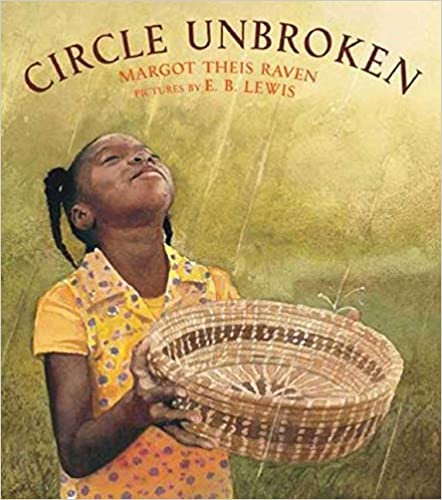
July 21 Interested in sweet grass baskets? We recommend Row Upon Row: Sea Grass Baskets of the South Carolina Lowcountry by Dale Rosengarten (1994). The Library has plenty of copies to share through the local history sections at the branch libraries.
July 22 Artist Mary Jackson describes the traditions of basket making using sweet grass and other natural plants and explains the importance of this craft that has been handed down through generations in South Carolina. Learn more about Mary's family legacy of beautiful art! Borrow this e-book with your Beaufort County Library card! [Note: The book is on Hoopla, one of the Library's two e-book, audio book, and streaming services.]
July 23 Just a sample of the many Gullah culture materials we share - and these you can ask to be brought to your car. (Details on how to make that happen.)

July 24 Though Sweetgrass Baskets and the Gullah Tradition by Joyce V. Coakley concentrates on the Charleston area basketmakers and traditions, Gullah throughout the coastal region, including in Beaufort District, used the same materials and techniques to fashion the baskets. The Library has plenty of copies to share with you.
July 30 Louise Meriwether wrote the first fictionalized account [for adults] (that I know about) of Robert Smalls' life in 1994. It was re-issued in 2013. We have a copy of the Pocket Books edition with the original book cover. The other copies of this title within SCLENDS are the University of South Carolina Press, 2013 editions.

BEING A GOOD NEIGHBOR AND/OR IT INTERESTED ME ENOUGH TO SHARE
July 6 The Library of Congress had a fascinating blog post about the "Great Buchanan Inheritance Hoax". I enjoyed reading about Neely Tucker's research and personal connection to the story. Perhaps you will as well. We humans have lots of foils, foibles, and frailties.
July 7 For a limited time only: Fold3 is offering free access to their Civil War Collections until 18 July 2021 at 11:59 p.m. MT. If you have any Civil War ancestors this might be a great time to dig a little deeper into their service records while access is temporarily free. [Note: This offer has expired.]
July 8 FamilySearch.org is promoting its military records this week as well. JSYK: The materials on FamilySearch.org are always free and access is free but you do have to register with a username and password.
July 14 Our friend the Beaufort County Historical Society is hosting an in-person local history program on Tuesday, July 20th about the First South Carolina Regiment USCT. It's free, being held at the First Presbyterian Church Fellowship Hall, and all are welcomed. For details: Check out their Facebook page. [Please note: The recording is supposed to be posted soon but as of this writing, 3 August 2021 at 2:30pm, it is not up.]
July 15 Recently made mobile: The Library of Congress has recently made U.S. congressional records dating back to the days of printing presses and the telegraph are easily accessible on mobile devices. With this latest update of Congress.gov — the official website for U.S. federal legislative information — the Library has transitioned over 33,000 bills and resolutions crafted by Congress between 1799 and 1873 (the 6th to 42nd U.S. Congresses) to a modern, user-friendly web format.
The Library’s “A Century of Lawmaking for a New Nation” collection has been a premier source of historic legal documents since it was first published online in 1998, serving as an access point to the lawmaking of early America.
July 29 I shared a link to an online "Ask the Archives" event that was set to occur on Friday, July 30. Note: The link has expired.... but this is going to become a last Friday of each month virtual SCDAH event. To participate, send your email address to dfoster@scdah.sc.gov - and in turn, you will get a Webex Meeting link by email for the next session.
RELATED TO THE FOURTH OF JULY HOLIDAY
July 2 Perhaps over this holiday weekend celebrating our history as Americans, you can give some thought to participating in this self-selected survey: • What do you think every American should know? Share your top ten list with the Aspen Institute Citizenship & American Identity Program. Learn more about this project before you submit your list.
July 2 Reminder: All units of the Library will be closed on Monday, July 5th since Independence Day falls on Sunday this year. The BDC staff will return on Tuesday, July 6th. If you need assistance, I will respond to you during business hours next week. May you and yours have a good holiday.
Subscribe to:
Comments (Atom)